Posts

What are the Beatitudes - And Why Are They Important

Image
The Beatitudes are a group of teachings recorded in the Gospel of Matthew. In perhaps His best known sermon, The Sermon on the Mount, Jesus taught the people and gave them a short list of eight teachings. Each of these eight teachings begin with the word 'Blessed". The word 'Beati' is the Latin term for happy, rich, or blessed. This term was eventually lengthen to become Beatitudes.  Four of the Beatitudes recorded in the Gospel of Matthew are repeated in the Gospel of Luke when he records the Sermon on the plain. The Gospel of Luke also contains a list of four woes, or counterparts to the Blessing listed in the Beatitudes. Each of the Beatitudes has two parts, a condition and a result. In the Gospel of Matthew he lists the eight Beatitudes which are followed by two additional blessings, but these are traditionally considered to be separate from the Beatitudes. In some newer translations of the Gospel these blessings are included as a ninth Beatitude.  The purpose of t...

Proof of the Exodus Story

Image
Twelve+ Findings That Prove the Exodus Story  The story of the Exodus is central to the formation of Israel. For decades, even centuries, the story of the Exodus was accepted as historically accurate. Somewhat recently a new movement known as the minimalist brought the entire story of the Exodus and the person of Moses into question. They are convinced the person of Moses was a fictional character and the story of the Exodus never really happened. Moreover, the story of the Patriarchs is also fiction and never took place. You might ask, what new information or archaeological discoveries brought about these dramatic change in attitude? The unfortunate truth is that these new thoughts and theories are not based on new archaeological discoveries or even new discoveries of old manuscripts or scrolls. Most, if not all, of the claims made by this group are based on a lack of evidence. Their argument states that no archaeological evidence exist to confirm the biblical story and it must th...

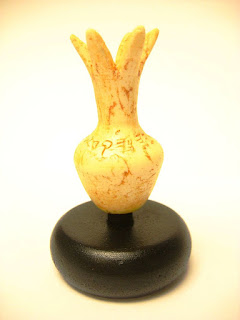
Ivory Pomegranate from Solomon's Temple - Authentic or Fraud?

Image
 Solomon's Temple The Temple of Solomon was completed in 957 B.C. and would stand for an amazing 410 years before it was destroyed in 587 B.C. by King Nebuchadnezzar II of Babylon. The Temple would be replaced by the second temple in 516 B.C. Nearly 500 years later, King Herod would build another grand temple on the same location in 37 B.C.  This temple would stand for just over 100 years before being destroyed in 70 A.D. by the Romans. The original (first) temple was conceived by King David, but God decided David would not be the one to actually construct the Temple. “Go and tell my servant David, ‘This is what the Lord says: You are not the one to build me a house to dwell in" 1 Chronicles 17:4  The reason for God not allowing King David to build the Temple is explained latter in the book of 1 Chronicles.  " But the word of the  Lord  came to me, saying, ‘ You have shed much blood and have waged great wars; you shall not build a house to My name, because ...

The Veil of Veronica - True Image of Jesus

Image
What is the Veil of Veronica The Veil of Veronica was first mentioned in the 4th of 5th century and has since become most associated with the Stations of the Cross. The Veil is believed by some to hold the image of Jesus' face, obtained while Jesus was being taken to the cross. The remarkable story, if true, would make Veronica's Veil one of, if not, the most valuable and sensational relics of all time. As with any relic or artifact of this kind, it is shrouded in mystery and has no shortage of critics.  A nearly two thousand year old artifact prompts many questions. Is the Veil real? Where did it come from? Why and when did it become associated with the Stations of the Cross? Who is Veronica, and why was she chosen to receive the Veil? Does the Veil still exist, and if so, where is it today?    Via Dolorosa The story of Veronica's Veil starts near the end of Jesus' earthly ministry. On Good Friday Jesus was condemned to death and eventually lead to Calvary where He was...

Historical Confirmation of Jesus

Image
 The Bible - a  Collection of Historical Documents? The New Testament was written by eight different authors who recorded the events and their perceptions of Jesus from their own unique viewpoints. Because these documents were combined into a single collection which became the Bible, they are rejected by most secular historians. It is a mystery to me why that just because an account is contained in the Bible it is almost automatically rejected. If these accounts of the life and ministry of Jesus had remained separate and independent of one another they likely would have been considered on their own merit, not by the title of the book they were contained within.  While this post will concentrate mostly on non-biblical sources regarding Jesus, I will touch briefly on the accuracy of the Gospels contained in the Bible. Just one example of many available involves Sir William Ramsey, a scholar who was educated and raised to doubt the accuracy of the New Testament. He set out t...